

 $150.00 USD
$220.00 USD
$150.00 USD
$220.00 USD Sold Out
  $30.00 USD
$44.00 USD
$30.00 USD
$44.00 USD
 Sold Out


The Miao, an ethnic minority group living in deep mountains of the most remote areas in Southwest China, who have no written language, have been using their textile patterns to record cultural information and history for over two thousand years. With more than 100 clans, each Miao clan has their own costume code so that they can be identified easily. Such cultural code is handed down from generation to generation among Miao women, who make works of art inspired by traditional Miao songs and legends.
In this class, Selina will walk you through the brilliant textile heritage of the Miao. She will present images of historical Miao costumes and baby carriers and talk about Miao traditional patterns and material culture. She will also discuss the changes that Miao embroidery has undergone and Miao artists’ contemporary practice.
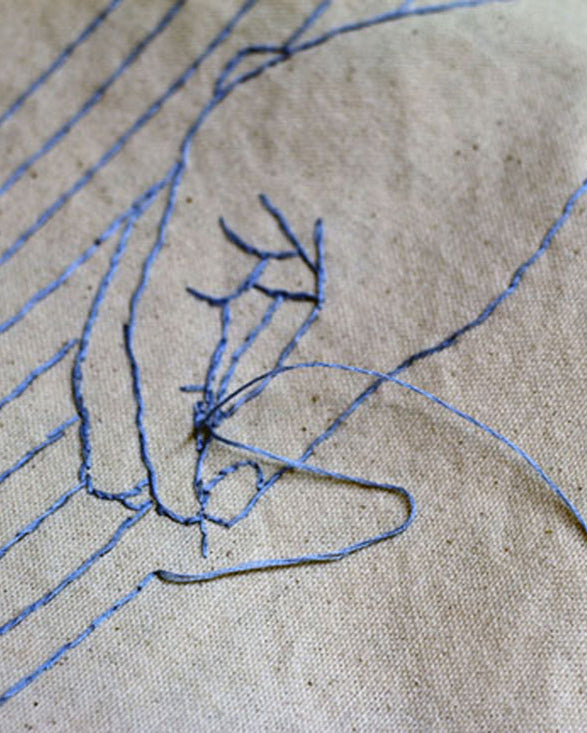
You’ll have the opportunity to learn Jiaoxiu, an ancient Miao embroidery technique which means embroidery with decorative wrapped thread. Traditionally Miao women wrap a cotton core thread with silk threads by hand, which is a very time consuming and complex process. Selina will invite you to experiment with a simplified approach of using commonly available ready-made gimp, which is accessible to today’s makers. You’ll learn how to embroider a traditional motif extracted from a stunning Miao baby carrier from Zhijin, a county in the middle of Guizhou province in China, where 48% of its population are ethnic minorities including Miao.
A PDF design pattern will be shared one week before the class for participants to transfer the design pattern to the fabric before the class, so that during the class we can focus on the stitching techniques.
Date
Thursday, May 7th, 2026
Time
12:00-2:30 pm ET
Location
Zoom, a link will be sent to participants the day before class
Cost
$75
Recording
All World Embroidery Series sessions will be recorded. A link to each recording will be emailed to all registrants following the live session. Each link is live for three months after the live session.
Class Materials:
About the World Embroidery Series
TATTER’s World Embroidery Series is a celebration of global embroidery craft. Sewists will encounter an astonishing array of culturally specific techniques, and will have the opportunity to learn from accomplished practicing teachers who are equally purposed in preserving heritage techniques.